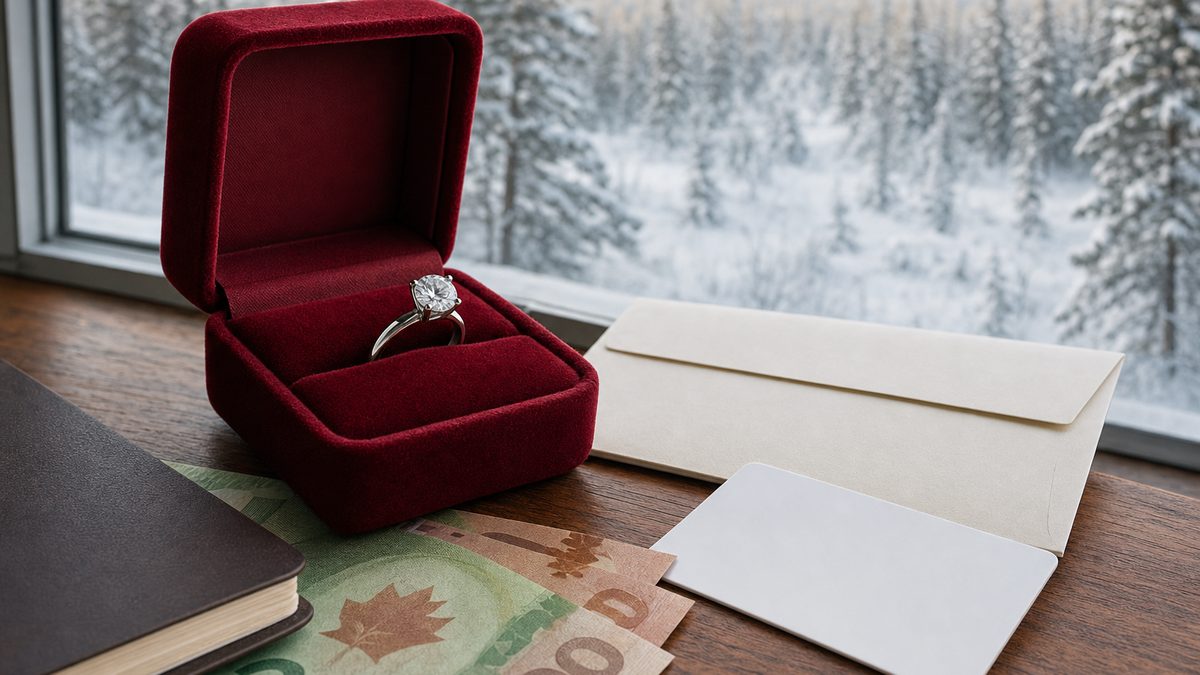
A diamond ring is usually the largest single purchase a Canadian makes at a jeweller, and many buyers would rather not put it on a credit card. Some want to avoid interest, some have a card limit below the price of the ring, and some simply prefer to pay from savings. The good news is that Canadian jewellers accept several other routes. Each one has limits worth knowing before you choose a ring.
Bank Drafts and Certified Cheques
For rings in the $5,000 to $15,000 CAD range, a bank draft is the most common choice. The bank takes the money from your account up front, so the jeweller knows it will clear. Expect a fee of roughly $7 to $10, a trip to the branch, and a short wait if the jeweller deposits it before releasing the ring. Ask for the exact payee name in advance.
Interac e-Transfer and Debit
Many independent jewellers now take Interac e-Transfer. It is fast and cheap, but daily and per-transfer limits at most Canadian banks sit in the low thousands, so a larger purchase may need to be split across several days or the limit raised temporarily. Debit at the counter works the same way: call your bank before the visit if the ring costs more than your daily point-of-sale limit.
Jeweller Financing
Large retailers offer instalment plans through third-party lenders. Some run interest-free for 6 to 12 months; others charge rates close to a credit card's. Read the deferred-interest terms carefully: on some plans, missing the payoff date means interest is charged back to the purchase date. Financing works best when the full price of the diamond is already budgeted.
Prepaid Vouchers: What Guides to the Best Paysafecard Online Casinos in Canada Show About Limits
Prepaid vouchers such as paysafecard are bought with cash at convenience stores and used online with a 16-digit PIN. They are built for small payments, which is why a walkthrough of paying with prepaid vouchers tends to focus on gaming and entertainment sites rather than retail purchases. The same walkthrough makes the limits plain: low voucher values, a cap on how many PINs can be combined, and no way to reverse a payment. For a ring, vouchers might cover a small deposit with an online seller, but few Canadian jewellers accept them at all.
How the Options Compare
| Method | Practical ceiling | Main drawback |
|---|---|---|
| Bank draft | No set limit | Branch visit and a small fee |
| Interac e-Transfer | Bank's daily limit | May need several days |
| Debit | Point-of-sale limit | Limit increase needed |
| Jeweller financing | Lender approval | Deferred-interest terms |
| Prepaid vouchers | A few hundred dollars | Rarely accepted by jewellers |
Whichever route you pick, ask for an itemized receipt and the diamond's grading report, and confirm any Canadian origin certificate before the money moves.
Frequently Asked Questions
Can I pay for an engagement ring with prepaid vouchers in Canada?
Rarely. Prepaid vouchers such as paysafecard are designed for small online payments, a single voucher tops out at a few hundred dollars, and most Canadian jewellers do not accept them. They suit small deposits with online sellers, not the full price of a ring.
Is a bank draft safe for buying a diamond?
Yes. A bank draft is drawn on the bank's own funds, so the jeweller knows it will clear. Ask the jeweller for the exact payee name before visiting the branch, and expect a fee of roughly $7 to $10.
Do jewellers report large cash purchases in Canada?
Dealers in precious metals and stones that sell $10,000 or more in a transaction have obligations under Canada's anti-money-laundering law, including reporting large cash transactions to FINTRAC. Paying by draft or transfer avoids carrying that much cash.
Continue Your Research
- Complete Diamond Buying Guide — step-by-step process for purchasing a diamond in Canada
- Engagement Rings in Canada — styles, settings and budgets
- Diamond Prices in Canada — current pricing data and trends