
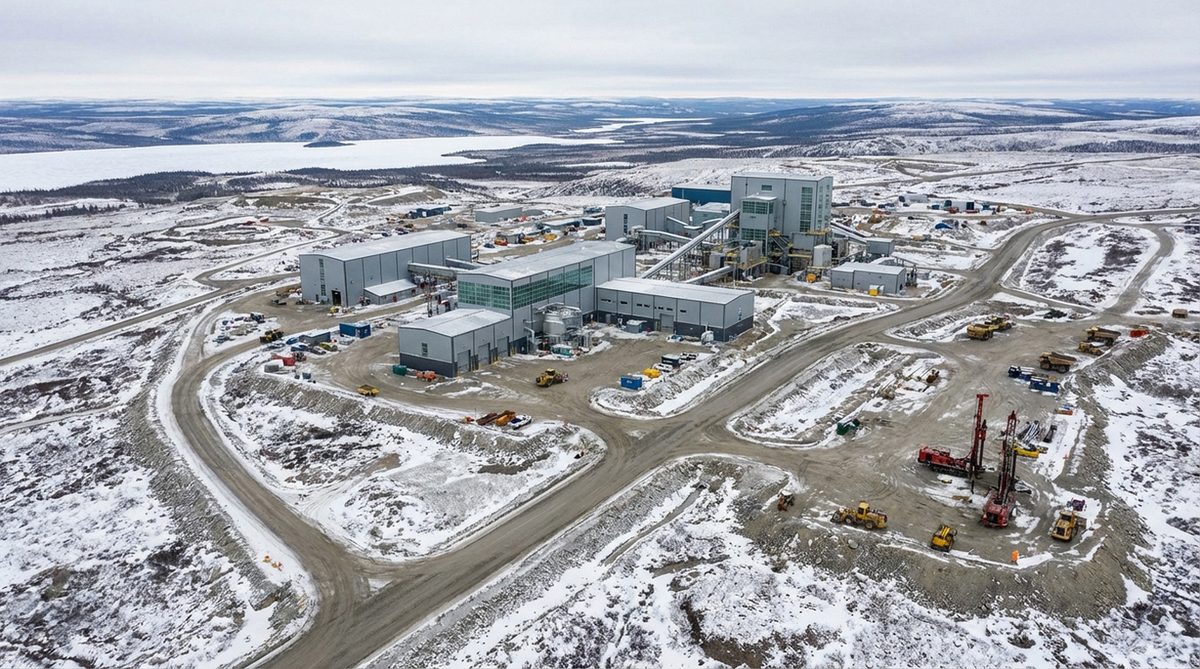
The Newest Major Diamond Mine in the World
When the Gahcho Kué diamond mine achieved commercial production in March 2017, it earned a distinction that no other mine on Earth could claim: it was the largest new diamond mine to open anywhere in the world in over a decade. Located at Kennady Lake, approximately 280 kilometres northeast of Yellowknife in the Northwest Territories, Gahcho Kué extended Canada's position as one of the world's leading diamond-producing nations and demonstrated that significant new discoveries could still be brought to production even as the global diamond industry faced challenges from declining demand and growing competition from laboratory-grown diamonds.
The mine is a joint venture between De Beers Canada (51%), a subsidiary of Anglo American, and Mountain Province Diamonds (49%), a Canadian public company listed on the Toronto Stock Exchange. De Beers serves as the operator, bringing the technical expertise and operational systems of the world's largest diamond mining company to what is one of the most remote mine sites in Canada's North.
The name "Gahcho Kué" comes from the Chipewyan (Dënesülíné) language and translates to "place of the big rabbits" — a name that connects the modern industrial operation to the deep traditional knowledge and cultural relationship that Indigenous peoples have with this landscape.
Discovery and the Path to Production
The kimberlite pipes at Kennady Lake were discovered in the early 1990s during the same wave of exploration that followed the groundbreaking Ekati discovery by Chuck Fipke and Stewart Blusson. Mountain Province Diamonds, then a junior exploration company, identified the diamondiferous kimberlites and began an extended process of sampling, evaluation, and feasibility analysis that would span more than two decades.
De Beers entered the project through its Canadian subsidiary, forming a joint venture with Mountain Province. The extended timeline from discovery to production reflected several factors: the remote location, the need for extensive environmental assessment, the technical challenge of mining kimberlite pipes at and beneath a lake, and the cyclical nature of diamond market conditions that influenced the investment decision.
Key milestones in the development timeline include:
- 1995: Initial discovery of kimberlite pipes at Kennady Lake through exploration drilling.
- 1997–2005: Extensive bulk sampling programs to evaluate the diamond content, quality, and value from each pipe.
- 2006–2013: Environmental assessment process, including a comprehensive review by the Mackenzie Valley Environmental Impact Review Board. The project received its water licence and land-use permit in 2014.
- 2014: Construction begins. The first phase involved site preparation, camp construction, and the critical task of dewatering portions of Kennady Lake to expose the kimberlite pipes.
- 2016: First ore processed through the plant in August. Ramp-up to full capacity begins.
- 2017: Commercial production declared in March, with the mine reaching nameplate processing capacity of approximately 3 million tonnes of kimberlite per year.
The total capital cost of developing Gahcho Kué was approximately CAD $1 billion, making it one of the largest private-sector investments in the Northwest Territories' history.
The Three Kimberlite Pipes
Gahcho Kué's diamond resources are contained within three kimberlite pipes — designated 5034, Hearne, and Tuzo — all located at or near Kennady Lake. Each pipe has distinct geological and economic characteristics:
| Pipe | Mining Method | Ore Grade (carats/tonne) | Status | Key Characteristics |
|---|---|---|---|---|
| 5034 | Open pit | ~1.6 | Mining completed | Largest pipe; highest grade; majority of total resource. First pipe mined; produced the bulk of output in early years. |
| Hearne | Open pit | ~1.2 | Active mining | Second pipe in the mine plan. Moderate grade with good gem-quality proportion. Pit development required stripping of significant overburden. |
| Tuzo | Open pit | ~1.0 | In development / early mining | Located partially beneath Kennady Lake; required additional dewatering. Lowest grade of the three pipes but extends overall mine life significantly. |
The kimberlite pipes at Gahcho Kué are geologically younger than many kimberlites in the Lac de Gras cluster, having intruded through the Canadian Shield approximately 540 to 610 million years ago during the Cambrian period. The diamonds within them, however, follow the same ancient pattern as other Canadian diamonds — crystallised deep in the Earth's mantle between 1 and 3 billion years ago and transported to the surface by violent kimberlite eruptions.
The combined indicated and inferred mineral resource across all three pipes is estimated at approximately 54 million carats, providing a mine life extending to approximately 2030 under the current mine plan. The potential for underground mining beneath the open pits represents additional upside that could extend operations further, though this would require additional capital investment and regulatory approvals.
Production Data and Diamond Output
Since achieving commercial production in 2017, Gahcho Kué has established itself as a consistent producer of significant diamond volumes:
| Year | Carats Recovered (Millions, Approx.) | Ore Processed (Million Tonnes) | Primary Pipe | Notes |
|---|---|---|---|---|
| 2017 | 4.6 | 2.6 | 5034 | First full year of commercial production; ramp-up completed |
| 2018 | 6.7 | 3.4 | 5034 | Peak output year; plant throughput exceeded nameplate capacity |
| 2019 | 6.9 | 3.6 | 5034 | Continued strong production from high-grade 5034 pipe |
| 2020 | 4.8 | 2.9 | 5034 / Hearne transition | Reduced output due to COVID-19 temporary suspension |
| 2021 | 5.9 | 3.3 | 5034 / Hearne | Recovery to near-full capacity; transition to Hearne pit advancing |
| 2022 | 5.5 | 3.3 | Hearne / 5034 residual | Hearne becomes primary ore source; strong diamond prices boost revenue |
| 2023 | 5.2 | 3.2 | Hearne | Steady production; Tuzo development underway |
| 2024 | 5.0 | 3.1 | Hearne / Tuzo | Tuzo ore begins contributing to plant feed; Hearne nearing completion |
The average value of Gahcho Kué diamonds has ranged from approximately US$60 to US$90 per carat, depending on market conditions and the mix of ore processed. While this per-carat value is somewhat lower than the Lac de Gras mines (Ekati and Diavik), Gahcho Kué compensates with relatively high ore grades and efficient processing. The mine has also produced notable large stones that command premium prices at tender — including several diamonds over 50 carats in the rough.
De Beers and Mountain Province: The Joint Venture
The partnership between De Beers and Mountain Province Diamonds brings together two very different entities in one of the most significant joint ventures in Canadian mining.
De Beers Canada (51%) is the operating partner and a subsidiary of De Beers Group, itself majority-owned by Anglo American. De Beers is the world's largest diamond company by value and has been involved in Canadian diamond exploration since the early 1990s. In addition to Gahcho Kué, De Beers operated the Snap Lake underground diamond mine (2008–2015, now closed and in reclamation) and the Victor mine in northern Ontario (2008–2019, now closed). Gahcho Kué is currently De Beers' only operating mine in Canada.
Mountain Province Diamonds (49%) is a publicly traded Canadian company (TSX: MPVD) whose entire business revolves around its stake in Gahcho Kué. The company receives 49% of the mine's rough diamond production and markets its share independently, primarily through regular tenders held in Antwerp, Belgium. For investors, Mountain Province offers one of the few pure-play exposure opportunities to a single, high-quality Canadian diamond mine through public equity markets.
Joint venture structure: Under the Gahcho Kué joint venture agreement, each partner receives its proportional share of the mine's rough diamond production in-kind. De Beers markets its 51% share through its global Sightholder system and other channels, while Mountain Province sells its 49% share independently. This structure means the two partners may achieve different per-carat revenues depending on their respective marketing strategies, sales timing, and buyer networks.
Remote Operations and Logistics
Gahcho Kué is among the most isolated mining operations in Canada. Located approximately 280 kilometres northeast of Yellowknife with no permanent road access, the mine relies on a combination of air transport and a seasonal winter road for personnel and supplies.
Workers travel to the mine site by chartered aircraft, typically on a two-weeks-on, two-weeks-off rotation. The on-site camp provides accommodation for approximately 500 workers at any given time, with facilities including dining halls, recreation areas, a gym, and medical services. At peak employment, the mine supports roughly 700 direct jobs with additional seasonal and contractor positions.
The annual winter road season — usually from late January to late March — is critical for the mine's logistics. During this narrow window, heavy trucks transport the bulk of the mine's annual fuel supply (diesel for power generation and heating), explosives, spare parts, and other supplies that are too heavy or bulky for air freight. A missed or shortened winter road season can significantly impact operating costs and even production schedules. Climate change is an increasing concern for winter road operations across northern Canada, as warming temperatures shorten the window during which lake ice can safely support heavy truck traffic.
Water Management at Kennady Lake
One of the most significant engineering challenges at Gahcho Kué is water management. The kimberlite pipes are located at and beneath Kennady Lake, meaning that mining requires the controlled dewatering of lake sections to expose the ore bodies. This process — carefully regulated by the Mackenzie Valley Land and Water Board — involves pumping water from designated areas of the lake into adjacent water bodies through a network of pipes and channels.
The water management system includes:
- Dykes and berms: Engineered structures separate mining areas from the remaining portions of Kennady Lake, allowing controlled dewatering while protecting the broader watershed.
- Water treatment: All water discharged from the mine site — including pit dewatering, processing plant effluent, and surface runoff — passes through treatment systems to meet strict water quality standards before release into the environment.
- Fish habitat offsetting: The dewatering of portions of Kennady Lake affected fish habitat, requiring the development of offsetting measures. These include the creation and enhancement of fish habitat in nearby water bodies to compensate for the temporary loss during the mining period.
- Post-closure refilling: The mine's closure plan includes the controlled refilling of the mined areas with water to recreate a modified version of Kennady Lake. This process will be managed to ensure water quality meets standards for aquatic life and traditional use.
Indigenous Participation and Community Benefits
Gahcho Kué operates within the traditional territories of several Indigenous groups, and the mine holds Impact and Benefit Agreements (IBAs) and participation agreements with the following communities and organisations:
- Tlicho Government
- Lutsel K'e Dene First Nation
- Yellowknives Dene First Nation
- Deninu K'ue First Nation
- Northwest Territory Métis Nation
- North Slave Métis Alliance
These agreements provide employment priorities, business opportunities, training and education funding, and financial benefits to the signatory communities. De Beers has committed to prioritising Northern and Indigenous hiring, with a target of maintaining a workforce where Northern residents comprise a significant proportion of total employment. Northern and Indigenous businesses have been awarded contracts for services including catering, maintenance, environmental monitoring, and transportation.
The mine also participates in socio-economic monitoring programs that track its impacts on community well-being indicators such as income, employment, education, health, and cultural vitality. These monitoring programs are conducted in collaboration with Indigenous governments and are reviewed by the Mackenzie Valley Environmental Impact Review Board.
Diamond Quality and Marketing
Gahcho Kué diamonds span the full spectrum of quality, with a notable proportion of gem-quality stones suitable for the jewellery market. The mine's production includes diamonds across the GIA colour and clarity ranges, with a meaningful share of stones grading in the near-colourless to colourless categories that command the highest prices.
The average per-carat value at Gahcho Kué — typically in the US$60 to US$90 range — reflects the overall production mix, which includes both high-value gem stones and lower-value near-gem and industrial-grade material. Individual large or exceptional stones can achieve values many multiples of this average. Mountain Province Diamonds regularly reports its sales results, providing transparency into the pricing and market dynamics of the mine's output.
Rough diamonds from Gahcho Kué are sold through two separate channels. De Beers markets its 51% share through its established global distribution network, which includes long-term supply agreements with select manufacturers (Sightholders) and auction sales. Mountain Province sells its 49% share independently, primarily through competitive tenders in Antwerp that attract buyers from India, Israel, Belgium, and other major diamond manufacturing centres.
Environmental Stewardship and Mine Life
The Gahcho Kué mine operates under a comprehensive environmental management system designed to minimise its footprint on the surrounding Arctic ecosystem. Key environmental programs include caribou and wildlife monitoring, water quality surveillance, dust and noise management, and progressive reclamation of disturbed areas.
The mine's current life-of-mine plan extends to approximately 2030, by which time all three kimberlite pipes are expected to be depleted under the open-pit mine plan. The closure and reclamation process will follow, with the ultimate goal of restoring Kennady Lake and the surrounding landscape to conditions that support wildlife, fish, and traditional land use. The closure plan has been developed in consultation with Indigenous communities and regulators, and De Beers has established financial assurance mechanisms to ensure that closure obligations can be met regardless of future business conditions.
There is potential for mine life extension beyond 2030 if underground mining beneath the depleted open pits proves to be economically viable. Preliminary studies have indicated additional diamond resources at depth, but the decision to pursue underground development would require further engineering studies, capital investment, and regulatory approval.
Looking ahead: Gahcho Kué represents the newest chapter in Canada's diamond mining story, but it may also be among the last major open-pit diamond mines to be developed in the Northwest Territories for the foreseeable future. With Diavik now closed and Ekati's future uncertain, Gahcho Kué's continued operation is increasingly important for maintaining Canada's position as a top-tier diamond producer and for sustaining the economic benefits that diamond mining brings to Northern communities. Explore the broader context in our industry report and interactive mines map.
Frequently Asked Questions About the Gahcho Kué Diamond Mine
When did the Gahcho Kué diamond mine open?
The Gahcho Kué diamond mine achieved commercial production in March 2017, following a construction phase that began in 2014. The first ore was processed in August 2016, and the mine ramped up to full production capacity over the following months. At the time of its opening, Gahcho Kué was the largest new diamond mine to open anywhere in the world in over a decade.
Who owns the Gahcho Kué mine?
Gahcho Kué is a joint venture between De Beers Canada (51%) and Mountain Province Diamonds (49%). De Beers, a subsidiary of Anglo American, is the operator of the mine and manages day-to-day operations. Mountain Province Diamonds is a publicly traded Canadian company listed on the Toronto Stock Exchange (TSX: MPVD) and has been involved in the project since the exploration phase.
Where is the Gahcho Kué mine located?
Gahcho Kué is located approximately 280 kilometres northeast of Yellowknife in the Northwest Territories, at Kennady Lake. The mine sits about 80 kilometres southeast of the Snap Lake mine (also owned by De Beers, now closed) and roughly 100 kilometres south of the Ekati and Diavik mines at Lac de Gras. It is accessible year-round by air and seasonally via a winter road.
What does "Gahcho Kué" mean?
The name Gahcho Kué comes from the Chipewyan (Dënesülíné) language and translates to "place of the big rabbits." The name reflects the traditional Indigenous knowledge and connection to the land in the area surrounding Kennady Lake, where the mine is located. The use of the traditional name acknowledges the cultural significance of the landscape to the Dënesülíné and other Indigenous peoples of the region.
What are the three kimberlite pipes at Gahcho Kué?
Gahcho Kué has three kimberlite pipes that are being mined: 5034, Hearne, and Tuzo. The 5034 pipe was the first to be mined and is the largest of the three, containing the majority of the mine's diamond resources. The Hearne pipe is the second to be developed, and the Tuzo pipe, which lies partially beneath Kennady Lake, is the last to be mined and required partial lake dewatering for access.
How many carats does Gahcho Kué produce per year?
At full production capacity, the Gahcho Kué mine produces approximately 5 to 7 million carats of rough diamonds per year. Annual output varies depending on which kimberlite pipe is being mined and the ore grade. The 5034 pipe has the highest grade, yielding around 1.6 carats per tonne, while the Hearne and Tuzo pipes have lower but still economically viable grades. Total mine-life production is estimated at approximately 54 million carats.
How long will the Gahcho Kué mine operate?
The Gahcho Kué mine has an estimated mine life extending to approximately 2030, based on current resource estimates and mine plans. The original mine plan projected a 12-year operational life from first production. However, the actual closure date may shift depending on diamond market conditions, the results of ongoing resource evaluation, and decisions about potential underground mining beneath the open pits.
What makes Gahcho Kué diamonds valuable?
Gahcho Kué diamonds are valued for their quality characteristics. The mine produces a high proportion of gem-quality stones, with many diamonds grading in the colourless to near-colourless range. The average price per carat at Gahcho Kué has been approximately US$60 to US$90, which is somewhat lower than the Lac de Gras mines (Ekati and Diavik) but reflects the larger average stone size and different quality mix. Notably, the mine has produced several significant large stones that fetch premium prices at auction.
How does the Gahcho Kué mine handle water management?
Water management is central to Gahcho Kué's operations because the kimberlite pipes are located at and beneath Kennady Lake. Before mining could begin, portions of Kennady Lake were dewatered — the water was carefully pumped into adjacent water bodies following strict environmental protocols. During operations, water from pit dewatering and the processing plant is managed through a system of containment and settling ponds, with treated water released back into the environment only after meeting stringent quality standards set by the Mackenzie Valley Land and Water Board.
What is Mountain Province Diamonds' role at Gahcho Kué?
Mountain Province Diamonds holds a 49% interest in the Gahcho Kué joint venture. As a non-operating partner, Mountain Province receives 49% of the mine's diamond production, which it markets and sells independently through its own sales channels, including regular tenders in Antwerp. Mountain Province is listed on the Toronto Stock Exchange (TSX: MPVD) and the OTCQX in the United States. The company's entire business is built around its stake in Gahcho Kué, making it one of the few pure-play diamond companies available to public market investors.