A Nation Without Diamonds
For most of the 20th century, the idea that Canada might harbour significant diamond deposits was dismissed by the global mining industry. Despite the Canadian Shield's geological similarities to the diamond-bearing cratons of southern Africa, decades of intermittent exploration had yielded nothing commercially viable. The conventional wisdom held that Canada's ancient glaciers had erased or buried the telltale signs of kimberlite pipes — the volcanic conduits that carry diamonds from deep within the earth's mantle to the surface.
By the late 1980s, virtually every major mining company had abandoned diamond exploration in Canada. De Beers, the world's dominant diamond producer, had conducted extensive surveys across the Canadian Shield over several decades and concluded that while scattered diamonds existed, no economically viable concentration would be found. The company's geologists believed that glaciation had dispersed indicator minerals so widely that tracing them back to their source would be essentially impossible.
It took a stubborn, unconventional Canadian geologist named Charles "Chuck" Fipke to prove them all wrong.
Chuck Fipke: The Man Who Changed Everything
Chuck Fipke was not a typical mining industry figure. A University of British Columbia geology graduate, Fipke had spent years working on diamond exploration projects in Brazil, South Africa, and Australia before turning his attention to Canada. What set Fipke apart was his obsessive focus on indicator mineral chemistry — the detailed analysis of microscopic mineral grains that accompany diamonds in kimberlite and are dispersed across the landscape by glaciers, streams, and geological processes.
While De Beers and other companies used indicator minerals primarily to identify promising areas for further exploration, Fipke took the technique to an unprecedented level of detail. Working from a small laboratory in Kelowna, British Columbia, he developed methods for analysing the chemical composition of individual pyrope garnet, chrome diopside, and ilmenite grains to determine how close they were to a kimberlite source. By tracking the chemistry of these grains across vast distances, Fipke believed he could trace them back to their point of origin — even through hundreds of kilometres of glacial dispersion.
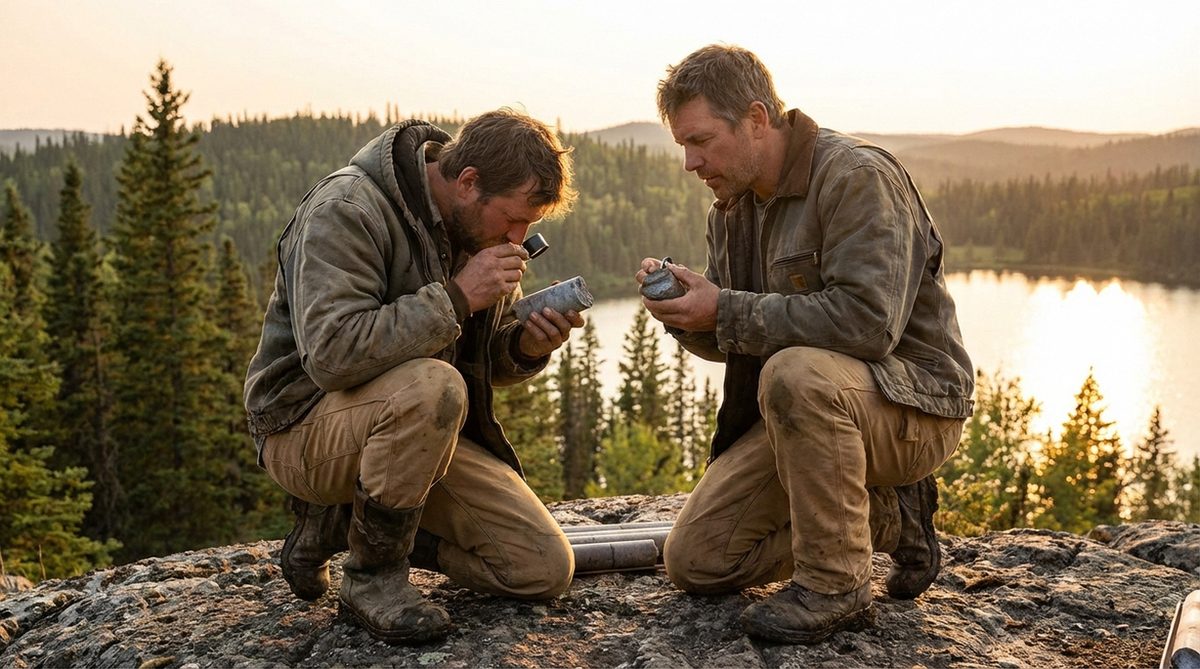
Together with his partner Stewart Blusson, a veteran geologist and bush pilot, Fipke spent much of the 1980s methodically sampling across the Slave geological province of the Northwest Territories. The work was gruelling: helicopter-supported sampling campaigns in some of the most remote and inhospitable terrain in North America, followed by months of painstaking laboratory analysis of thousands of mineral grains.
Timeline: Key Moments in Canada's Diamond History
-
Fipke Begins Canadian Exploration
Chuck Fipke starts systematic indicator mineral sampling across the Canadian Shield, initially focusing on areas near the Saskatchewan-NWT border. His work is funded by small exploration companies and his own resources.
-
Trail Narrows to Lac de Gras
After years of sampling and analysis, Fipke and Blusson narrow the trail of indicator minerals to the Lac de Gras area, approximately 300 km northeast of Yellowknife. The mineral chemistry suggests increasing proximity to a kimberlite source.
-
Partnership with BHP
Running low on funds, Fipke and Blusson partner with Australian mining giant BHP (Broken Hill Proprietary), which provides the financial resources needed for an intensive drilling programme at Lac de Gras. The partnership proves decisive.
-
The Discovery: Point Lake Kimberlite
On 14 November 1991, core samples from a kimberlite pipe near Point Lake (later designated the "Point Lake pipe") reveal commercial quantities of diamonds. When news leaks in late November, it triggers an unprecedented staking rush across the NWT.
-
The Great Canadian Diamond Staking Rush
Millions of hectares are staked across the Canadian Shield by over 200 companies and thousands of individual prospectors. It becomes the largest staking rush in Canadian mining history, with claim activity extending from the NWT to Ontario, Quebec, and beyond.
-
Environmental Assessment Begins
BHP submits its environmental impact statement for the Ekati project. An extensive public review process begins, involving Indigenous communities, environmental groups, and territorial and federal regulatory bodies. The review sets precedents for northern mining regulation.
-
Ekati Approved & Construction Begins
After a two-year environmental assessment, the Ekati Diamond Mine receives regulatory approval. Construction begins immediately on the $900 million project, including the processing plant, airstrip, camp facilities, and the initial Panda open pit.
-
Ekati Opens: Canada's First Diamond Mine
On 14 October 1998, the Ekati Diamond Mine officially opens, making Canada a diamond-producing nation for the first time. First-year production exceeds expectations, and the mine quickly establishes itself as a source of high-quality gem diamonds.
-
Diavik Diamond Mine Opens
Rio Tinto's Diavik Diamond Mine begins production on an island in Lac de Gras, just 30 km from Ekati. The $1.3 billion project features an innovative ring dike system that allows mining beneath the lake. Diavik rapidly becomes one of the world's most productive diamond mines by value. The Kimberley Process Certification Scheme also launches internationally this year.
-
Canada Becomes Third-Largest Producer by Value
With Ekati and Diavik in full production, Canada rises to become the world's third-largest diamond producer by value, behind only Botswana and Russia. Canadian diamonds earn a reputation for exceptional quality and ethical provenance.
-
Snap Lake and Victor Mines Open
De Beers opens two new Canadian mines: Snap Lake in the NWT (Canada's first entirely underground diamond mine) and the Victor mine in northern Ontario (the first diamond mine in Ontario). Canada's diamond production reaches its historical peak.
-
CanadaMark Programme Launches
Dominion Diamond Corporation (later Arctic Canadian Diamond Company) launches the CanadaMark programme, providing a verified chain-of-custody certification for diamonds mined at Ekati and Diavik. Each CanadaMark diamond receives a unique laser inscription and certificate of Canadian origin.
-
Snap Lake Mine Closes
De Beers suspends operations at Snap Lake after persistent water management challenges and declining diamond prices make the underground operation uneconomic. The mine is placed on care and maintenance, marking the first closure of a Canadian diamond mine.
-
Gahcho Kué Diamond Mine Opens
The Gahcho Kué mine, a joint venture between De Beers and Mountain Province Diamonds, begins production approximately 280 km northeast of Yellowknife. It is the world's largest new diamond mine to open in over a decade and extends Canada's diamond production timeline into the 2030s.
-
Victor Mine Closes
De Beers' Victor mine in northern Ontario ceases production after 11 years of operation, having produced over 8 million carats. Closure and remediation activities begin, returning the site toward its natural state.
-
Ekati Enters Creditor Protection
Dominion Diamond Mines, operator of Ekati, files for creditor protection amid the COVID-19 pandemic's impact on diamond markets. The mine is subsequently acquired by Arctic Canadian Diamond Company and operations resume, though at reduced levels.
-
Diavik Approaches End of Mine Life
Rio Tinto's Diavik mine reaches the final phase of its operational life after more than two decades of production. The mine has produced over 100 million carats and contributed billions to the NWT economy. Progressive closure and remediation planning is well advanced.
The Staking Rush: Diamond Fever Sweeps Canada
The discovery at Lac de Gras triggered one of the most extraordinary staking rushes in Canadian mining history. When reports of Fipke and Blusson's diamond find became public in late November 1991, the response was immediate and overwhelming. Mining companies large and small, along with thousands of individual prospectors, descended on the NWT to stake mineral claims across the Canadian Shield.
At the peak of the rush, over 200 companies were actively exploring for diamonds in Canada. Tens of millions of acres were staked, and exploration spending on diamond projects soared from virtually nothing to hundreds of millions of dollars annually. The rush extended far beyond the NWT, with diamond exploration programmes launched in Ontario, Quebec, Saskatchewan, Alberta, and British Columbia.
The staking rush had a profound impact on Yellowknife, which transformed almost overnight from a quiet northern capital into a bustling mining hub. Hotels were fully booked, charter aircraft were in constant demand, and the city's real estate market surged. For the first time, the NWT attracted significant international investment attention, and the territorial economy began a period of sustained growth that would continue for two decades.
The scale of the rush: In the months following the discovery, mineral claims staked in the NWT exceeded 30 million acres — an area larger than the entire province of New Brunswick. The staking activity was so intense that the territorial government's mining recorder office was overwhelmed, and special procedures had to be implemented to manage the flood of applications.
Building the Mines: Engineering in the Arctic
Constructing diamond mines in the subarctic presented extraordinary engineering challenges. The Lac de Gras area lies approximately 200 kilometres north of the treeline, in a landscape of permafrost, rock, and thousands of small lakes. There are no permanent roads — all heavy equipment, fuel, and construction materials must be transported over the seasonal Tibbitt to Contwoyto Winter Road during a roughly eight-week window each year.
The Ekati mine required the construction of a complete self-contained community in the wilderness, including a processing plant, accommodation for over 1,000 workers, a 1,500-metre airstrip, fuel storage facilities, maintenance shops, water treatment systems, and waste management infrastructure. The $900 million construction cost made it one of the most expensive mining projects in Canadian history at the time.
The Diavik mine presented even greater challenges. Several of the richest kimberlite pipes lay beneath the waters of Lac de Gras, requiring the construction of massive ring dikes — engineered barriers that hold back the lake water, allowing the lakebed to be drained and mined. The A154 dike, completed in 2002, enclosed an area of approximately 11 hectares and was one of the largest water-retention structures ever built for a mining operation.
The Kimberley Process and Canadian Ethical Standards
Canada's emergence as a diamond producer coincided with growing global concern about conflict diamonds — rough diamonds used by rebel movements to finance wars against legitimate governments, particularly in Sierra Leone, Angola, and the Democratic Republic of Congo. The devastating human cost of the conflict diamond trade led to international efforts to establish a system for certifying diamonds as conflict-free.
Canada was a founding participant in the Kimberley Process Certification Scheme (KPCS), which was formally established in 2003. The scheme requires participating countries to certify that shipments of rough diamonds are conflict-free and to implement domestic controls to prevent conflict diamonds from entering their borders. Canada's active participation helped lend credibility to the process and reinforced the country's reputation as a source of ethically produced diamonds.
Beyond the Kimberley Process, Canada developed its own additional certification and traceability programmes that exceed international requirements. The GNWT's diamond certification programme, which laser-inscribes diamonds with the territorial polar bear logo and a unique serial number, provides consumers with proof of NWT origin. The CanadaMark programme offers a chain-of-custody guarantee from mine to retail, and the broader Canadian Diamond Code of Conduct establishes voluntary ethical standards for the industry.
The Canadian Diamond Code of Conduct
The Canadian Diamond Code of Conduct was developed as an industry initiative to establish ethical guidelines specific to the Canadian diamond trade. The code covers several key areas: responsible sourcing and full traceability from mine to market, environmental stewardship and commitment to minimising ecological impact, worker health and safety standards exceeding regulatory minimums, meaningful engagement with Indigenous and local communities, and transparency in reporting and corporate governance.
While voluntary, the code has been adopted by major Canadian producers and has helped differentiate Canadian diamonds in the global market. Consumers increasingly seek assurance that their diamond purchases have not contributed to environmental destruction or human rights abuses, and Canadian certification programmes provide a level of verification that few other diamond-producing nations can match.
The CanadaMark Programme: Mine-to-Market Traceability
The CanadaMark programme represents one of the most comprehensive diamond traceability initiatives in the world. Originally developed by Dominion Diamond Mines for stones from Ekati and Diavik, the programme tracks each diamond through every stage of its journey from rough crystal to polished gem.
The process works as follows: rough diamonds are sorted and classified at the mine, then shipped to government-supervised valuation facilities in Yellowknife. Stones destined for the CanadaMark programme are tracked through cutting and polishing (which may occur in Canada, India, or other cutting centres) and are laser-inscribed with a unique CanadaMark hallmark on their girdle. Each diamond receives a certificate of Canadian origin and a unique identification number that consumers can verify online.
The CanadaMark programme has been particularly successful in the North American retail market, where consumer awareness of ethical sourcing issues is high and willingness to pay a premium for verified Canadian diamonds is well established. Industry data suggests that CanadaMark-certified diamonds command a premium of 10–15% over comparable uncertified stones.
Consumer demand for Canadian diamonds: Surveys by the Diamond Producers Association indicate that over 70% of North American diamond buyers consider country of origin an important factor in their purchasing decision. Canadian diamonds consistently rank as the most desirable origin among consumers who express a preference, ahead of diamonds from Botswana, Australia, and Russia. This consumer preference underpins the commercial success of Canadian certification programmes.
Canada's Place in the Global Diamond Market
Canada's rise as a diamond producer has been one of the most remarkable stories in modern mining history. From zero production in 1997, Canada reached peak annual output of approximately 23 million carats in 2007, making it the third-largest diamond producer in the world by value and the fifth-largest by volume. The relatively high proportion of gem-quality stones in Canadian production — estimated at 55–65% of total output by value — has made Canada an important source of high-quality diamonds for the jewellery trade.
Canadian diamonds have earned a distinctive reputation in the market for their quality, ethical provenance, and traceability. The country's strict environmental and labour regulations, combined with its Indigenous partnership frameworks and certification programmes, have positioned Canadian diamonds as a premium product in a market increasingly driven by consumer demand for transparency and responsible sourcing.
While production has declined from peak levels as older mines approach the end of their lives, Canada remains a significant diamond-producing nation. The question facing the industry is whether new discoveries will sustain Canadian diamond production into the next generation, or whether the remarkable story that began with Chuck Fipke's discovery in 1991 will draw to a close within the next decade.
Legacy and Future: What Comes Next for Canadian Diamonds
The legacy of Canada's diamond industry extends far beyond the carats extracted from beneath the tundra. The sector pioneered a new model of resource development that prioritises Indigenous economic participation, environmental responsibility, and community benefit alongside commercial production. The Impact Benefit Agreements negotiated with Indigenous communities have become a template for resource development projects around the world, and Canada's certification programmes have set a global standard for diamond traceability and ethical sourcing.
Looking ahead, the future of diamond mining in Canada depends on several factors: continued exploration for new deposits across the vast Canadian Shield, potential mine life extensions at existing operations, the evolving market dynamics between natural and laboratory-grown diamonds, and consumer demand for diamonds of verified Canadian origin. While the current generation of mines is approaching the end of its productive life, the geological potential of the Canadian Shield remains largely unexplored, and new discoveries could extend the Canadian diamond story well into the future.
Frequently Asked Questions
Who discovered diamonds in Canada?
Canadian geologist Chuck Fipke and his partner Stewart Blusson discovered diamonds in Canada's Northwest Territories in 1991. After nearly two decades of prospecting, Fipke traced indicator minerals — pyrope garnets, chrome diopsides, and ilmenites — to kimberlite pipes near Lac de Gras, approximately 300 km northeast of Yellowknife. The discovery triggered the largest staking rush in Canadian mining history.
When was the first Canadian diamond mine opened?
The Ekati Diamond Mine, Canada's first, opened on 14 October 1998. Operated by BHP (now Arctic Canadian Diamond Company), it was built at a cost of approximately $900 million. First-year production exceeded expectations, and the mine quickly established itself as a source of high-quality gem diamonds.
How did Chuck Fipke find diamonds in Canada?
Fipke used indicator mineral sampling, analysing the chemical composition of microscopic mineral grains dispersed by glaciers. By tracing these grains upstream against glacial flow across thousands of kilometres, he located the source kimberlite pipes near Lac de Gras. This technique had been considered impractical in glaciated terrain by most geologists.
What was the Canadian diamond staking rush?
When the Lac de Gras discovery became public in late 1991, over 200 companies and thousands of individuals staked millions of hectares across the Canadian Shield. It was the largest staking rush in Canadian history, extending from the NWT to Ontario, Quebec, and beyond. Exploration spending soared to hundreds of millions annually.
What is the Kimberley Process and how is Canada involved?
The Kimberley Process Certification Scheme is an international agreement established in 2003 to prevent conflict diamonds from entering the legitimate trade. Canada was a founding participant and has developed additional certification programmes — including CanadaMark and the GNWT polar bear certificate — that go beyond Kimberley Process requirements to provide full chain-of-custody traceability.
What is the CanadaMark programme?
CanadaMark provides a verified chain-of-custody guarantee for diamonds mined at Ekati and Diavik. Each CanadaMark diamond is laser-inscribed with a unique hallmark and comes with a certificate guaranteeing Canadian origin, ethical sourcing, and traceability from mine to retail. CanadaMark diamonds typically command a 10–15% premium.
How many diamond mines are there in Canada?
Canada has had four major producing diamond mines: Ekati (1998), Diavik (2003), Snap Lake (2008–2015), and Victor in Ontario (2008–2019). Gahcho Kué opened in 2016 and continues production. As of 2026, Diavik is nearing the end of its mine life while Gahcho Kué is projected to operate into the 2030s.
What is the Canadian Diamond Code of Conduct?
The Canadian Diamond Code of Conduct is a voluntary industry standard covering responsible sourcing, environmental stewardship, worker safety, community engagement, and transparency. Participants maintain full traceability of Canadian diamonds from mine to market and uphold standards exceeding Kimberley Process minimums, reinforcing Canada's reputation for ethically produced diamonds.